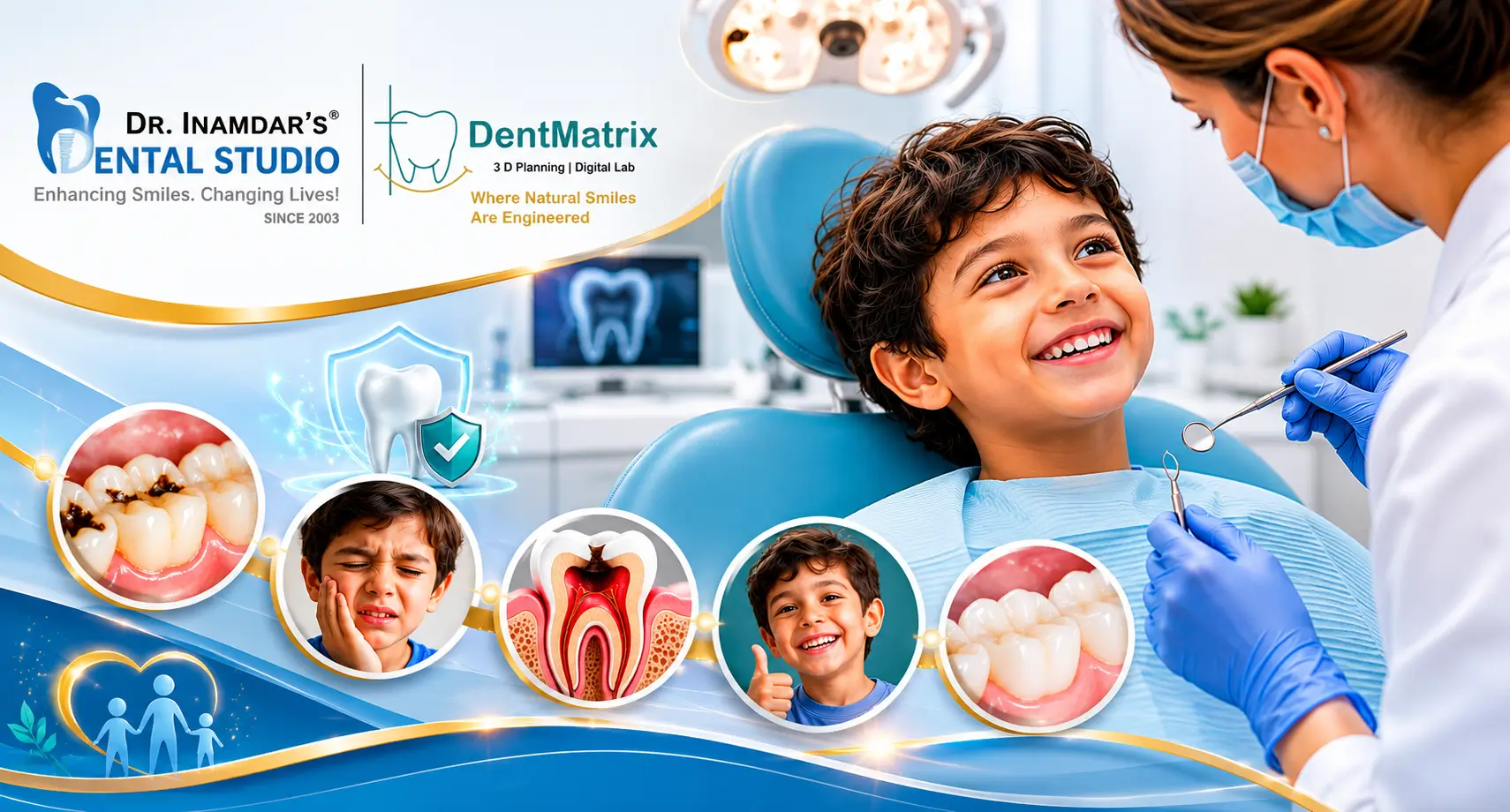


This is one of the most common things parents tell us:
“Doctor, it’s only a milk tooth… will it really matter if we wait?”
And honestly, we understand why parents think this way.
The problem is — cavities in children don’t behave like adult cavities.
In real clinical practice, we often see children who initially had:
• A tiny black spot
• Mild sensitivity
• Food getting stuck occasionally
And within months, the same tooth develops:
• Pain while eating
• Infection or swelling
• Difficulty sleeping
• Fear of chewing on one side
The earlier a cavity is treated, the easier and more comfortable the solution usually is.
Milk teeth are softer and thinner than permanent teeth.
That means decay spreads much faster.
Some of the most common reasons we see are:
• Frequent snacking and sugary foods
• Sleeping after milk without cleaning teeth
• Poor brushing habits
• Sticky snacks and chocolates
• Delayed dental visits
• Mouth breathing causing dryness
Many parents wait until pain begins but unfortunately, pain often means the cavity has already reached deeper layers of the tooth.
From day-to-day clinical experience, untreated cavities in children can lead to:
Tooth Pain: Especially during eating or at night.
Infection & Swelling: Small cavities can eventually reach the nerve and surrounding tissues.
Difficulty Eating Properly: Children may avoid chewing on one side, affecting nutrition and chewing habits.
Fear of Dental Treatment: Children who come only when they are in pain often become anxious about future dental visits.
Early Loss of Milk Teeth: This can affect spacing and alignment of future permanent teeth.
Future Orthodontic Problems: When milk teeth are lost too early, nearby teeth start shifting.
We often tell parents: A small cavity today is much easier than a complicated treatment later.
Treatment depends on how early the cavity is detected.
Options may include:
• Preventive fluoride care
• Small tooth-colored fillings
• Pulp therapy (baby RCT)
• Space maintainers if a tooth is lost early
• Habit and diet counselling
The earlier we identify the issue, the more conservative and comfortable the treatment usually becomes.
Pediatric dentistry today focuses heavily on prevention and comfort.
At our clinic, we use:
• Advanced diagnostics for early cavity detection
• Minimally invasive techniques
• Experienced pediatric specialists
• Child-friendly treatment protocols
• Patient-focused preventive care
This allows treatment that is:
Instead of waiting for pain and emergency visits, modern dentistry helps prevent problems before they become severe.
Step 1 — Gentle Evaluation
We help the child feel comfortable before beginning any treatment.
Step 2 — Clear Explanation
Parents are guided about the condition and available options.
Step 3 — Comfortable Treatment
Treatment is performed in a calm, reassuring environment.
Step 4 — Preventive Guidance
We discuss brushing routines, diet habits, and long-term prevention.
Our approach focuses on creating positive dental experiences for children.
Your child should ideally be evaluated if:
• You notice black or brown spots on teeth
• Food frequently gets stuck
• There is sensitivity or pain
• Your child avoids chewing on one side
• There is bad breath despite brushing
• It has been more than 6 months since the last dental visit
Even children without pain benefit from preventive dental evaluations.
No. Cavities continue progressing unless treated.
Milk teeth guide jaw development, chewing, speech, and future permanent teeth alignment.
Yes. Much faster than in adults because milk teeth are softer.
Modern pediatric dentistry focuses on gentle, minimally invasive treatment.
Yes. Infection from milk teeth can impact developing permanent teeth underneath.
Regular brushing, controlled sugar intake, and routine dental visits.
Most major dental problems in children begin as small, painless cavities that were simply ignored for too long.
Early care helps:
• Prevent pain and infection
• Avoid emergency dental visits
• Maintain healthy jaw development
• Build positive dental experiences
At Dr. Inamdar’s Dental Studio, we combine:
• Advanced technology
• Ethical, compassionate care
• Personalized treatment planning
• Child-friendly dental protocols
to rebuild smiles with precision, comfort, and long-term stability, starting from childhood itself.
Because the goal is not just treating cavities…

 Kurla Clinic
F12, 1st floor, Orchid Metropolis, S.G. Barve Marg, Opp. Shubh Sagar Restaurant, Near Kurla Railway Station, Kurla (E), Mumbai - 400024
Get Directions
South MumbaiShop No. 10, A Block, Sheriar Baug, Ramchandra Bhat Marg, Opp. Gate no. 2, J J Hospital, Mumbai - 400009
Get Directions