

One of the most common questions parents ask is:
“My child’s teeth look slightly crooked… but is it too early to worry about braces?”
And honestly, this is where timing matters the most.
Many parents believe orthodontic care starts only in teenage years. But in reality, we often identify early jaw growth and alignment problems much earlier, sometimes between ages 6 to 9.
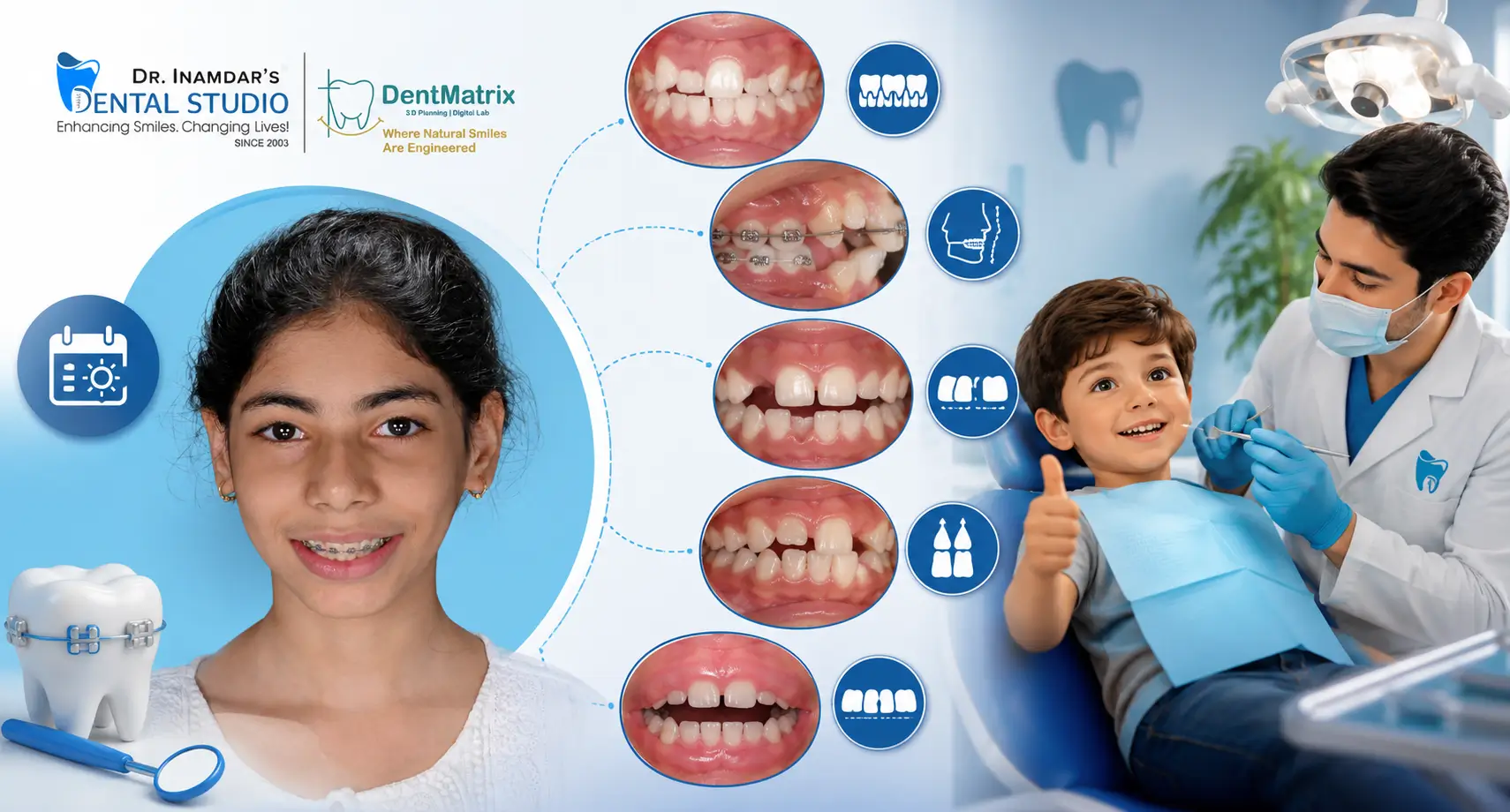
In our clinic, many children who come for routine dental visits show early signs like:
• Crowding
• Mouth breathing
• Improper bite
• Thumb sucking habits
• Narrow jaw development
When identified early, these problems are often easier, faster, and more predictable to manage.
Orthodontic concerns are not always just “genetic.”
From real clinical experience, many early issues are linked to:
• Mouth breathing instead of nasal breathing
• Low tongue posture
• Thumb sucking or prolonged pacifier habits
• Early loss of milk teeth
• Soft diets with less chewing activity
• Improper jaw growth patterns
These factors influence how the jaws and face develop over time.
Understanding how your child's smile naturally develops can help parents recognise concerns early. Watch this short video explaining how primary teeth erupt, loosen, and make way for permanent teeth, highlighting why this stage plays an important role in lifelong oral health.
We often tell parents:
Here are some signs parents should not ignore:
Crowded or overlapping teeth
Especially when permanent teeth start erupting.
Mouth breathing
A very common but overlooked issue affecting jaw growth and airway development.
Thumb sucking after age 4–5
Can alter bite and tooth position.
Difficulty chewing properly
May indicate bite imbalance.
Teeth not meeting correctly
Crossbite, open bite, or deep bite patterns.
Early or delayed loss of milk teeth
Can affect spacing for permanent teeth.
Snoring or disturbed sleep
Sometimes associated with airway and jaw development issues.
Early orthodontic care does not always mean “full braces.”
Depending on the child’s growth stage, treatment may include:
• Growth guidance appliances
• Habit correction therapy
• Space maintainers
• Early aligner guidance in selected cases
• Myofunctional therapy for tongue posture and breathing
• Monitoring jaw development over time
The goal is to guide natural growth — not force aggressive treatment too early.
Orthodontics today is no longer just about straight teeth.
Modern treatment focuses on:
• Facial growth
• Jaw balance
• Airway development
• Function and stability
At our clinic, we use:
• Advanced diagnostics
• Facially driven 3D planning
• Digital growth assessments
• Interdisciplinary evaluation
• Patient-focused treatment planning
This allows treatment that is:
Instead of waiting for severe crowding later, we focus on early guidance and prevention.
Step 1 — Growth & Bite Assessment
We evaluate teeth, jaw growth, breathing patterns, and facial development.
Step 2 — Digital Analysis
Photos, scans, and bite evaluation help us understand growth direction.
Step 3 — Personalized Guidance
Not every child needs immediate treatment. Sometimes monitoring is enough.
Step 4 — Gentle Early Intervention (if required)
Simple appliances or habit correction strategies may be recommended.
Parents often worry about how their child will feel during orthodontic treatment. Our focus is always conservative, child-friendly, and growth-focused.
Hear directly from one of our young patients as he shares his orthodontic journey and treatment experience at Dr. Inamdar's Dental Studio.
Your child should ideally be evaluated if:
• Teeth appear crowded early
• There is mouth breathing or snoring
• Thumb sucking continues
• Teeth do not align properly
• There is visible jaw imbalance
• One parent had major orthodontic issues
The ideal age for a first orthodontic screening is usually around 6–8 years.
No. Many children only require monitoring or simple growth guidance.
Around 6–8 years is ideal for detecting early growth concerns.
In many cases, yes. Early guidance can simplify or shorten future treatment.
Absolutely. Mouth breathing affects jaw growth, tongue posture, and facial development.
Modern orthodontic care is designed to be gentle and minimally invasive.
Even mild crowding or bite issues can benefit from early assessment.
The biggest advantage of early orthodontic care is not cosmetic, it is developmental.
When problems are identified early, we can often:
• Guide healthier jaw growth
• Improve airway and breathing patterns
• Reduce future treatment complexity
• Build better long-term stability
At Dr. Inamdar’s Dental Studio, we combine:
• Advanced technology
• Ethical, compassionate care
• Personalized growth-focused planning
• Interdisciplinary expertise
to rebuild smiles with precision, comfort, and long-term stability starting from childhood itself.
Because the goal is not just straight teeth…
At Dr. Inamdar's Dental Studio, we believe that every child's dental journey should be filled with encouragement, patience, and positivity. Our youngest patients continue to inspire us with their courage and bright smiles.
See some of the wonderful moments that make pediatric dental care so rewarding.

 Kurla Clinic
F12, 1st floor, Orchid Metropolis, S.G. Barve Marg, Opp. Shubh Sagar Restaurant, Near Kurla Railway Station, Kurla (E), Mumbai - 400024
Get Directions
South MumbaiShop No. 10, A Block, Sheriar Baug, Ramchandra Bhat Marg, Opp. Gate no. 2, J J Hospital, Mumbai - 400009
Get Directions