

Digital dentistry means using computers, cameras, and 3D machines to plan and make dental treatment. Instead of only using hand tools and messy paste, the dentist uses a computer to see your teeth clearly first.
This helps the dentist plan your treatment before it starts. It also helps you understand your treatment better, because you can see it on a screen too.
At Dr. Inamdar's Dental Studio, digital dentistry is used every day, at both the Kurla and South Mumbai clinics.
Old dental care used mostly hands and metal tools. The dentist would press soft paste into a tray to copy your teeth shape. This paste felt heavy in the mouth and took time to set.
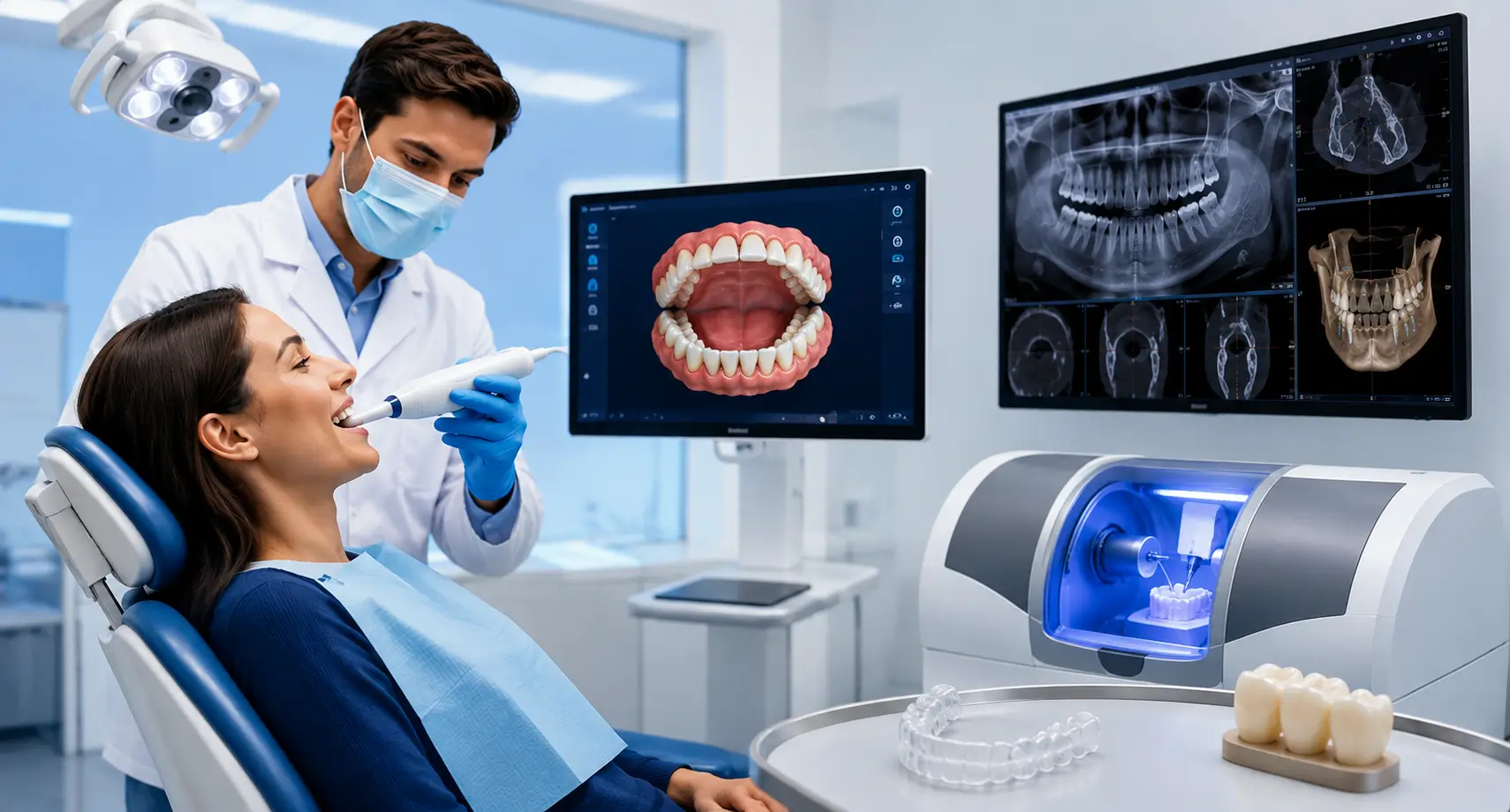
Digital dentistry uses a small scanner instead. The scanner takes clear pictures of your teeth in a few minutes. There is no paste and no heavy tray.
The computer then uses these pictures to plan your treatment. This makes the whole process faster, cleaner, and easier to understand.
A few main tools work together to make digital dentistry possible.
Intraoral scanner: A small wand that takes a detailed picture of your teeth and gums, instead of using paste.
Digital X-ray: A screen-based X-ray that shows the inside of your teeth and jaw, using less radiation than old X-ray film.
Design software: A computer program where the dentist plans and shapes your new tooth, crown, or smile.
3D printer or milling machine: A machine that builds the planned crown, aligner, or restoration in real material.
These tools work as one system. A scan feeds the design software, and the design feeds the 3D printer or milling machine.
1. Scan. The dentist scans your teeth, gums, and bite with a small camera wand.
2. Design. The scan appears on a screen. The dentist or design team plans your treatment on the computer.
3. Preview. You see the plan before treatment starts, so you know what to expect.
4. Build. Once you approve the plan, a 3D printer or milling machine builds the crown, aligner, or restoration.
5. Treatment. The finished piece is fitted and checked in your mouth.
At Dr. Inamdar's Dental Studio, most of these steps happen in-house through DentMatrix Lab, so scanning, design, and building do not need to travel between different labs.
• Show you a preview of your new smile before treatment starts
• Plan the exact position of a dental implant before surgery
• Design and build a crown or veneer with a close, accurate fit
• Plan clear aligners to move teeth step by step
• Finish some treatments, like a single crown, in fewer visits
Each of these uses the same base idea. A scan builds a digital plan, and the plan guides the treatment.
Dr. Aslam Inamdar, BDS, MDS, founded Asia's first 3D treatment planning centre for dental professionals. He has over 23 years of experience and has trained more than 1,000 dental professionals in advanced digital dentistry techniques.
Every treatment plan at the clinic is built around your face first. This is called 3D Facially Driven Dentistry. Your new teeth are designed to match your face, not a fixed template.
The clinic runs its own in-house 3D lab, DentMatrix Lab, so scanning, design, and manufacturing happen under one roof.
The clinic has treated over 40,000 patients, placed over 10,000 implants, and completed over 1,000 smile makeovers using digital planning.
Digital dentistry changes how treatment feels for the patient, in three clear ways.
Less guessing. You see your plan before treatment starts, so there are fewer surprises.
Less discomfort. Scanners replace heavy paste trays, so scanning feels quick and light.
Fewer visits. In-house design and building can shorten the time between planning and treatment.
Digital Smile Design: See a preview of your new smile before treatment for veneers or a full smile makeover.
Dental Implants: Plan the exact position and angle of an implant before surgery begins.
Crowns & Bridges: Design and build a close, accurate fit for a damaged or missing tooth.
Aligners: Plan a step-by-step path to straighter teeth without metal braces.
Smile Makeover: Combine several digital treatments into one complete smile plan.
Single / Same Day Dentistry: Complete some treatments, like a crown, in one visit using in-house design and milling.
Digital dentistry means using computers, scanners, and 3D machines to plan and make dental treatment. Instead of only using hand tools and messy paste, the dentist uses a computer to see your teeth clearly and plan your treatment before it starts.
Yes. Digital dentistry uses cameras, scanners, and computer screens. There are no sharp tools used during scanning, and no extra pain. Digital X-rays used in the process also use less radiation than old-style dental X-rays.
Cost depends on your treatment plan, not just the digital tools used. Digital dentistry often reduces the number of visits and remakes needed, which can save time in the long run. Ask the front desk team for a clear cost estimate for your case.
Digital dentistry is the big umbrella. It covers scanners, computer design, and 3D printing for many treatments. Digital Smile Design is one part of it, focused only on letting you see your new smile before treatment for veneers, crowns, or a smile makeover.
Dr. Inamdar's Dental Studio offers digital dentistry at its Kurla and South Mumbai clinics. The clinic runs its own in-house 3D lab, DentMatrix Lab, so scanning, design, and treatment can happen without long waits between visits.
Digital dentistry sounds technical, but the idea is simple. A computer helps your dentist see clearly, plan carefully, and show you the result before treatment begins.
Curious how digital dentistry could work for your smile? Book a consultation at Dr. Inamdar's Dental Studio, Kurla or South Mumbai, and see your treatment plan before you decide anything.

 Kurla Clinic
F12, 1st floor, Orchid Metropolis, S.G. Barve Marg, Opp. Shubh Sagar Restaurant, Near Kurla Railway Station, Kurla (E), Mumbai - 400024
Get Directions
South MumbaiShop No. 10, A Block, Sheriar Baug, Ramchandra Bhat Marg, Opp. Gate no. 2, J J Hospital, Mumbai - 400009
Get Directions