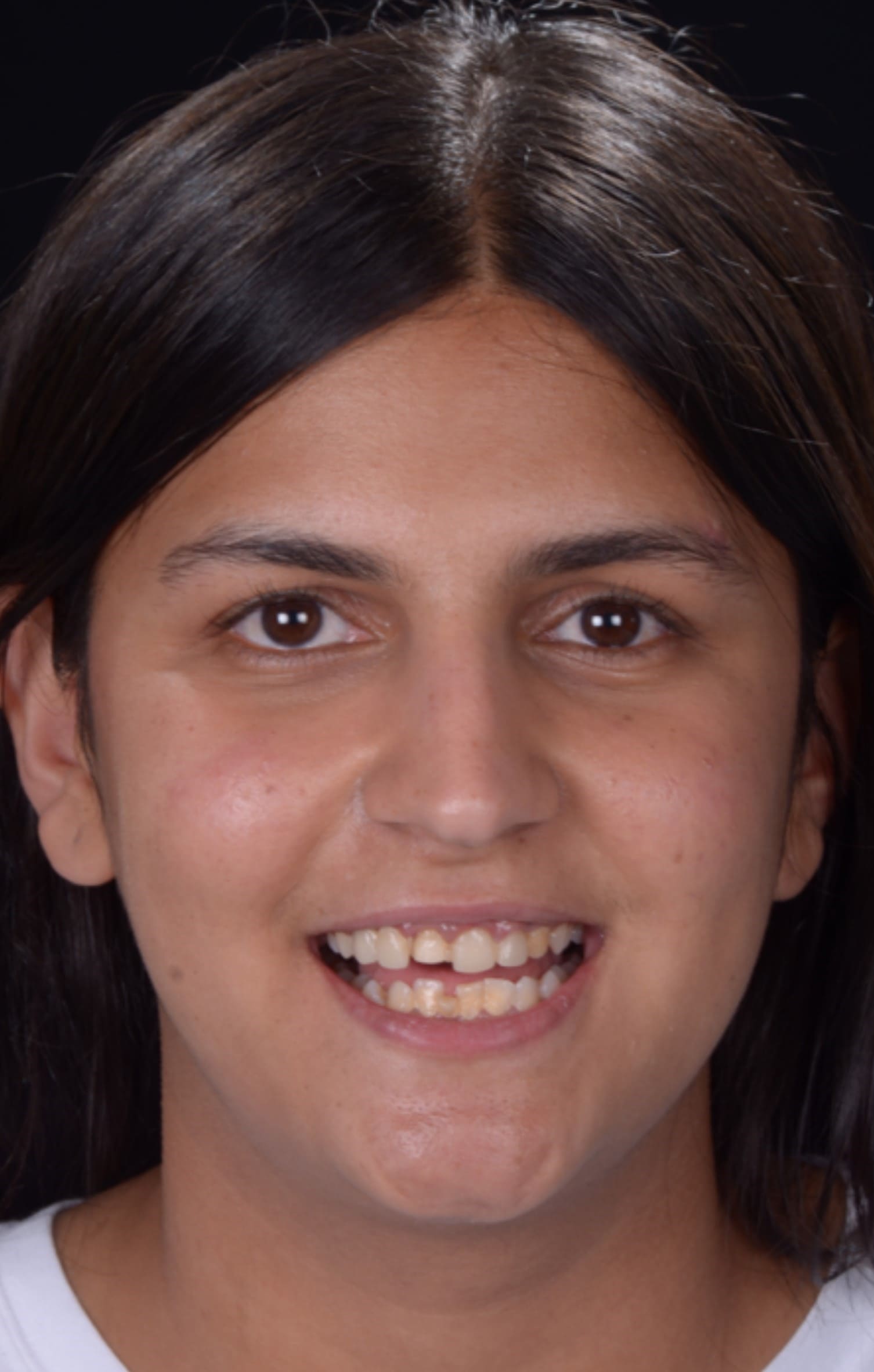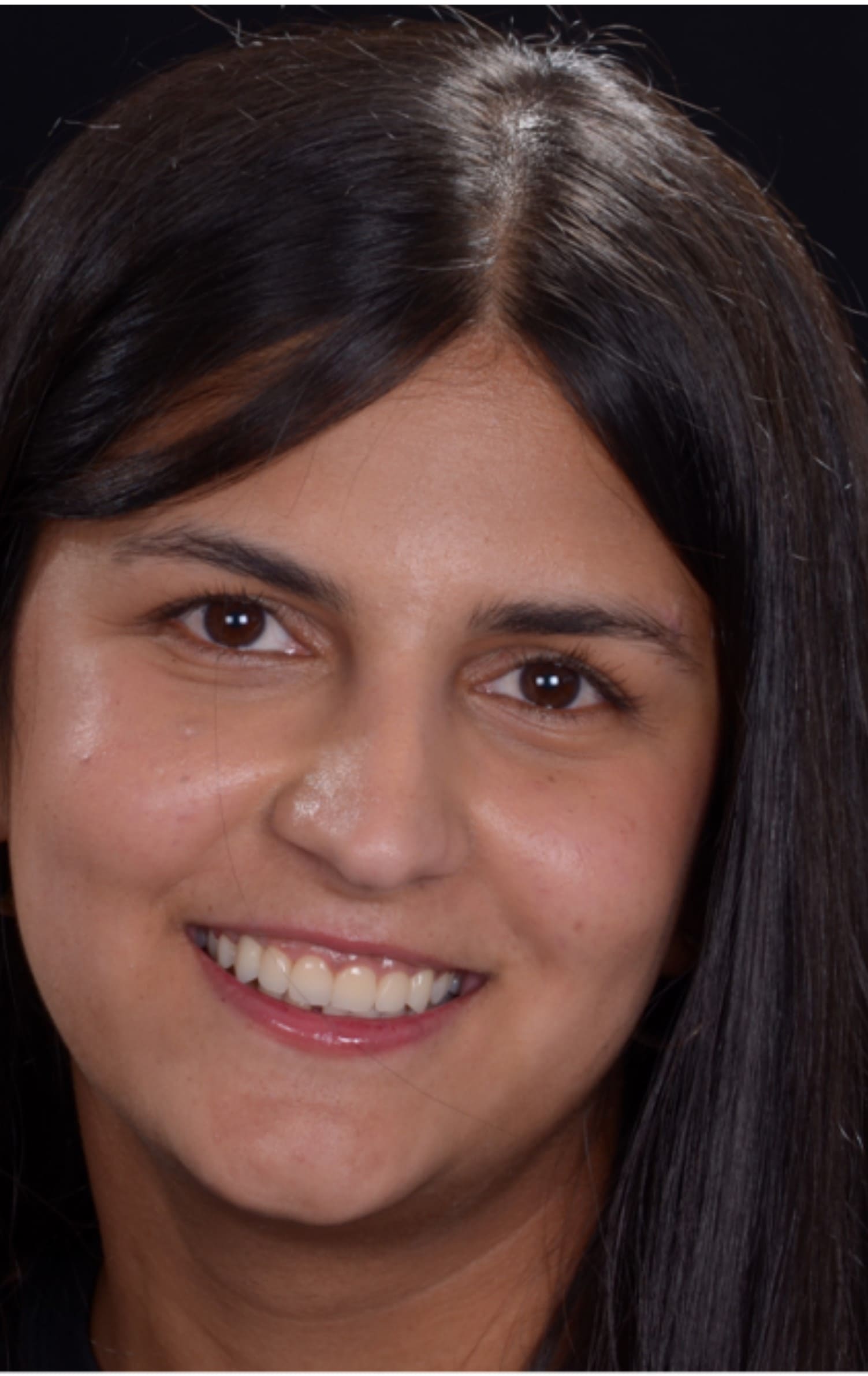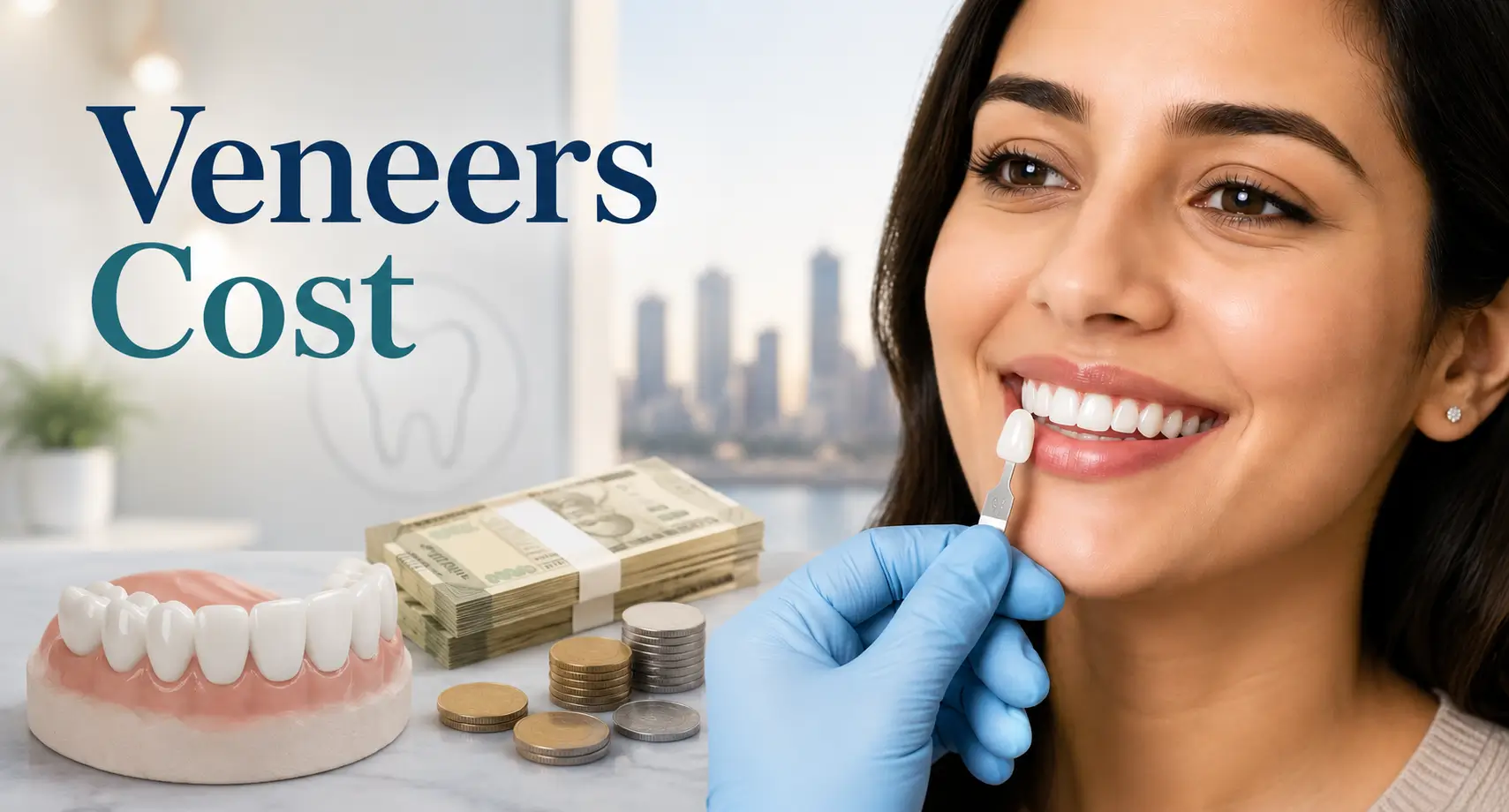


A dental veneer is a thin shell bonded to the front of a tooth to change its shape, shade, or alignment without touching the tooth underneath it. Veneer cost in Mumbai runs from roughly ₹3,000 to ₹25,000 per tooth, and almost all of that spread comes down to one decision, composite or porcelain.
This guide covers what a veneer actually fixes, what the procedure involves at each visit, and what decides the final cost, so you can evaluate a quote with confidence.
| Veneer Type | Approximate Cost* |
|---|---|
| Composite Veneer | ₹3,000 to ₹8,000 per tooth |
| Porcelain Veneer | ₹10,000 to ₹20,000 per tooth |
| E-max Veneer | ₹12,000 to ₹25,000 per tooth |
| Zirconia Veneer | ₹15,000 to ₹25,000 per tooth |
| No-Prep Veneer (e.g. Lumineers) | ₹20,000 to ₹35,000 per tooth |
| Removable Veneer (Snap-On) | ₹15,000 to ₹40,000 per set |
Based on published Mumbai and India market rates. A full smile makeover of 6 to 8 teeth is priced separately and depends on the material and lab used. Removable veneers are priced per set, not per tooth.
A veneer is a cosmetic fix, not a structural one, it covers only the front surface of the tooth. It is generally suited for:
• Chipped, cracked, or worn front teeth.
• Permanent staining that whitening cannot correct.
• Small gaps between front teeth.
• Slightly uneven or misshapen teeth.
• Minor misalignment that does not need full orthodontic correction.
A veneer is the wrong choice when a tooth has lost significant structure, has a large filling, or has had a root canal, those cases usually need a crown instead, which covers the entire tooth rather than just its front surface.
• Material: tooth-coloured resin, shaped directly on the tooth.
• Best suited for: minor fixes, single teeth, and patients who want the fastest option.
• Advantages: usually done in one visit, lower cost, easy to repair.
• Trade-off: stains more easily and lasts fewer years than porcelain or E-max.
• Cost per tooth: ₹3,000 to ₹8,000.
• Material: layered ceramic, fabricated in a dental lab.
• Best suited for: patients wanting a natural, long-lasting result across multiple teeth.
• Advantages: strong stain resistance, closely mimics natural enamel.
• Trade-off: needs at least two visits and slightly more enamel preparation than composite.
• Cost per tooth: ₹10,000 to ₹20,000.
• Material: lithium disilicate, a glass ceramic known for translucency.
• Best suited for: front teeth where light reflection and a natural edge are the priority.
• Advantages: thinner than porcelain, can often be placed with minimal enamel removal.
• Trade-off: priced higher, reflecting the material and lab precision involved.
• Cost per tooth: ₹12,000 to ₹25,000.
• Material: zirconium dioxide, the strongest option of the four.
• Best suited for: patients with a heavy bite or a history of chipping thinner veneers.
• Advantages: high fracture resistance.
• Trade-off: less translucent than E-max, so it is used for strength-driven cases rather than as the default aesthetic choice.
• Cost per tooth: ₹15,000 to ₹25,000.
• Material: ultra-thin porcelain, typically 0.2 to 0.3mm, roughly a third the thickness of a traditional porcelain veneer.
• Best suited for: patients who want a cosmetic change without permanently altering enamel, and cases with minor staining or gaps rather than significant shape correction.
• Advantages: little to no enamel removal, in many cases the tooth can return close to its original state if the veneer is later removed.
• Trade-off: not ideal for heavily discoloured or misaligned teeth, since there is very little material to mask the underlying tooth, and it commands a premium price for the specialised fabrication involved.
• Cost per tooth: ₹20,000 to ₹35,000.
• Material: dental-grade resin, custom moulded from an impression of your existing teeth.
• Best suited for: a short-term cosmetic change, a trial run before committing to permanent veneers, or an occasion-specific need.
• Advantages: no tooth preparation at all, fully removable, and no in-chair bonding procedure required.
• Trade-off: not designed for daily eating, needs to be removed for meals, and is not a substitute for permanent veneers if the goal is a lasting result.
• Cost: [₹15,000 to ₹40,000 per set], figure to be confirmed against clinic pricing before publishing.
• Step 1: Consultation and Smile Assessment: evaluation of tooth condition, bite, and the shade or shape change you want.
• Step 2: Digital Smile Design and Mock-Up: a preview of the proposed shape and shade before any enamel is touched.
• Step 3: Minimal Tooth Preparation: a thin layer of enamel is prepared to make room for the veneer, less for E-max and no-prep options.
• Step 4: Digital Scan or Impression: used to fabricate porcelain, E-max, or zirconia veneers in the lab.
• Step 5: Temporary Veneers: worn while the permanent set is being fabricated, applicable for lab-made veneers only.
• Step 6: Bonding: the final veneer is checked for fit and shade, then bonded permanently.
A quote that skips the digital smile design and mock-up step is worth asking about, that stage is what lets you approve the result before the change becomes permanent.
Removable veneers follow a shorter path: an impression is taken, the set is fabricated off-site, and it is fitted and adjusted at a follow-up visit, with no enamel preparation or bonding involved at any stage.
• Material chosen: the single biggest factor, as shown in the price table above.
• Number of teeth: a full smile makeover of 6 to 8 teeth is priced differently than a single tooth fix.
• Lab quality: digital labs with precise shade matching cost more but reduce the chance of a visible mismatch.
• Digital smile design: clinics that include a mock-up in the process typically build that into the overall cost.
• Dentist experience and clinic location: pricing in a city like Mumbai reflects the cost of running that practice, not the veneer material alone.
• Correct minor gaps and shape irregularities without orthodontic treatment.
• Resist future staining better than natural enamel, especially porcelain and E-max.
• Preserve far more natural tooth structure than a crown.
• Deliver a result that is visible from the very first appointment after bonding.
According to Dr. Aslam Inamdar, Cosmetic & Implant Dentist | Orofacial Architect | Digital Dentistry Innovator at Dr. Inamdar's Dental Studio, “the patients happiest with their veneers are the ones who saw the mock-up first. A digital preview removes the guesswork, you are approving a result, not hoping for one.”
Among the best dental clinics in Mumbai, look for one that includes digital smile design and a physical or digital mock-up as a standard part of the veneer process, not an add-on. Ask which lab fabricates the veneer, how many shade-matching sessions are included, and what the plan is if a veneer chips or needs replacement.
Dr. Inamdar's Dental Studio runs clinic at two Mumbai locations - Kurla and South Mumbai, and fabricates veneers through DentMatrix Lab - a very own in-house 3D planning and CAD/CAM laboratory, which plans each veneer around your bite and facial proportions rather than the tooth in isolation.
A veneer covers only the front surface of a tooth and suits chips, stains, gaps, or minor misalignment. A crown covers the entire tooth and is used when the tooth has lost significant structure, often after a root canal, a large filling, or a fracture. The two solve different problems, not the same one at a different price.
Composite veneers can often be completed in a single visit since the resin is shaped directly on the tooth. Porcelain and E-max veneers need two to three visits, one for preparation and digital scanning, and another for bonding the lab-fabricated shell once it is ready.
Yes, though the amount removed is minimal, usually less than half a millimetre of enamel per tooth. No-prep or minimal-prep veneers reduce this further, but some enamel contact is still needed for the veneer to bond securely and sit flush with the surrounding teeth.
Porcelain and E-max veneers typically last 10 to 15 years with proper care. Composite veneers last less, usually 4 to 8 years, and are more prone to staining and chipping, though they are also easier and cheaper to repair or replace when needed.
Yes, veneers are not reversible once the enamel is prepared, since that layer does not grow back. This is one reason a mock-up or digital smile design before treatment matters, it lets you approve the shape and shade before any enamel is touched.
Veneer cost tells you the material, it does not tell you whether the process includes a digital mock-up, a lab you can ask about, or a dentist who has planned your bite along with your smile. Compare the four types above against what your teeth actually need, then judge a quote by what it includes, not just the number on it.
Curious what your own teeth would look like before committing to a single tooth? Book a smile assessment at Dr. Inamdar's Dental Studio, Kurla or South Mumbai, and see the digital mock-up first.

 Kurla Clinic
F12, 1st floor, Orchid Metropolis, S.G. Barve Marg, Opp. Shubh Sagar Restaurant, Near Kurla Railway Station, Kurla (E), Mumbai - 400024
Get Directions
South MumbaiShop No. 10, A Block, Sheriar Baug, Ramchandra Bhat Marg, Opp. Gate no. 2, J J Hospital, Mumbai - 400009
Get Directions