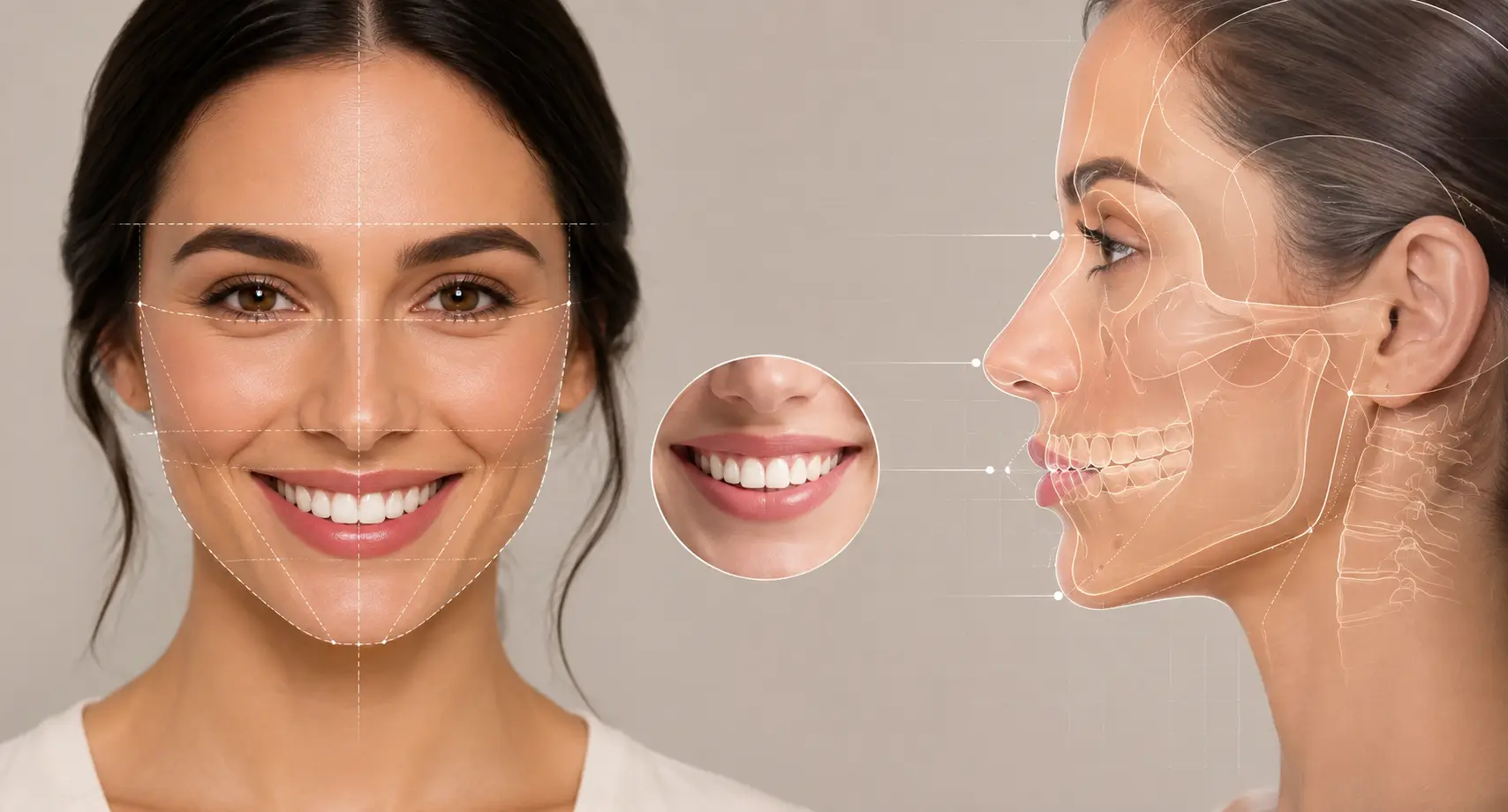


Facial architecture influences a smile through five measurable factors: facial thirds and proportions, the position of the dental midline relative to the face, lip position and lip line, overall face shape, and the jaw relationship. A smile design that ignores these factors and focuses on the teeth alone tends to look artificial, even when each individual tooth is well made.
Facial architecture refers to the underlying structure of the face, the bones, proportions, and soft tissue that determine how a smile sits within it. A tooth that looks perfect in isolation can still look wrong once placed in a specific face, because the face itself sets the rules for what proportion, width, and length will look natural.
This is why two patients with an identical dental issue, such as worn front teeth or uneven edges, often need two different treatment plans. The teeth are similar. The faces are not.
The face is commonly evaluated in horizontal thirds, from hairline to eyebrows, eyebrows to the base of the nose, and nose to chin. These proportions guide how much tooth length will look balanced against the lower third of the face specifically.
The dental midline, the space between the two upper front teeth, is checked against the center of the face, often using the interpupillary line, an imaginary horizontal line drawn between the pupils, as a reference. A midline that is noticeably off-center from the face can make an otherwise well-made smile look visually unbalanced.
How the upper and lower lips move during speech and smiling determines how much tooth and gum tissue is visible. Lip mobility varies from person to person, and a smile design that does not account for this can result in teeth that show too much gum, too little tooth, or an unnatural display when speaking.
Face shape, oval, round, square, long, or heart-shaped, guides decisions on tooth length, width, and the curve of the incisal edge. This is one of the most direct links between facial architecture and tooth design:
| Face Shape | Common Trait | Typical Tooth Design Goal |
|---|---|---|
| Oval | Balanced, symmetrical proportions | Natural tooth proportions, minimal correction needed |
| Round | Softer angles, shorter face height | Slightly longer, more squared teeth to add definition |
| Square | Strong jawline, wider lower face | Softer, more rounded incisal edges to balance angularity |
| Long | Greater vertical face height | Wider, shorter-looking teeth to reduce visual length |
| Heart | Wider forehead, narrower chin | Proportional width without overpowering the lower face |
These are general starting principles, not fixed rules. Individual facial proportions, lip dynamics, and personal preference are evaluated alongside face shape before any design is finalised.
How the upper and lower jaws meet affects not only function but also how the lower third of the face is supported. Restorative work planned without evaluating the bite can look correct at rest and still cause discomfort, altered speech, or visible imbalance once the patient talks or chews.
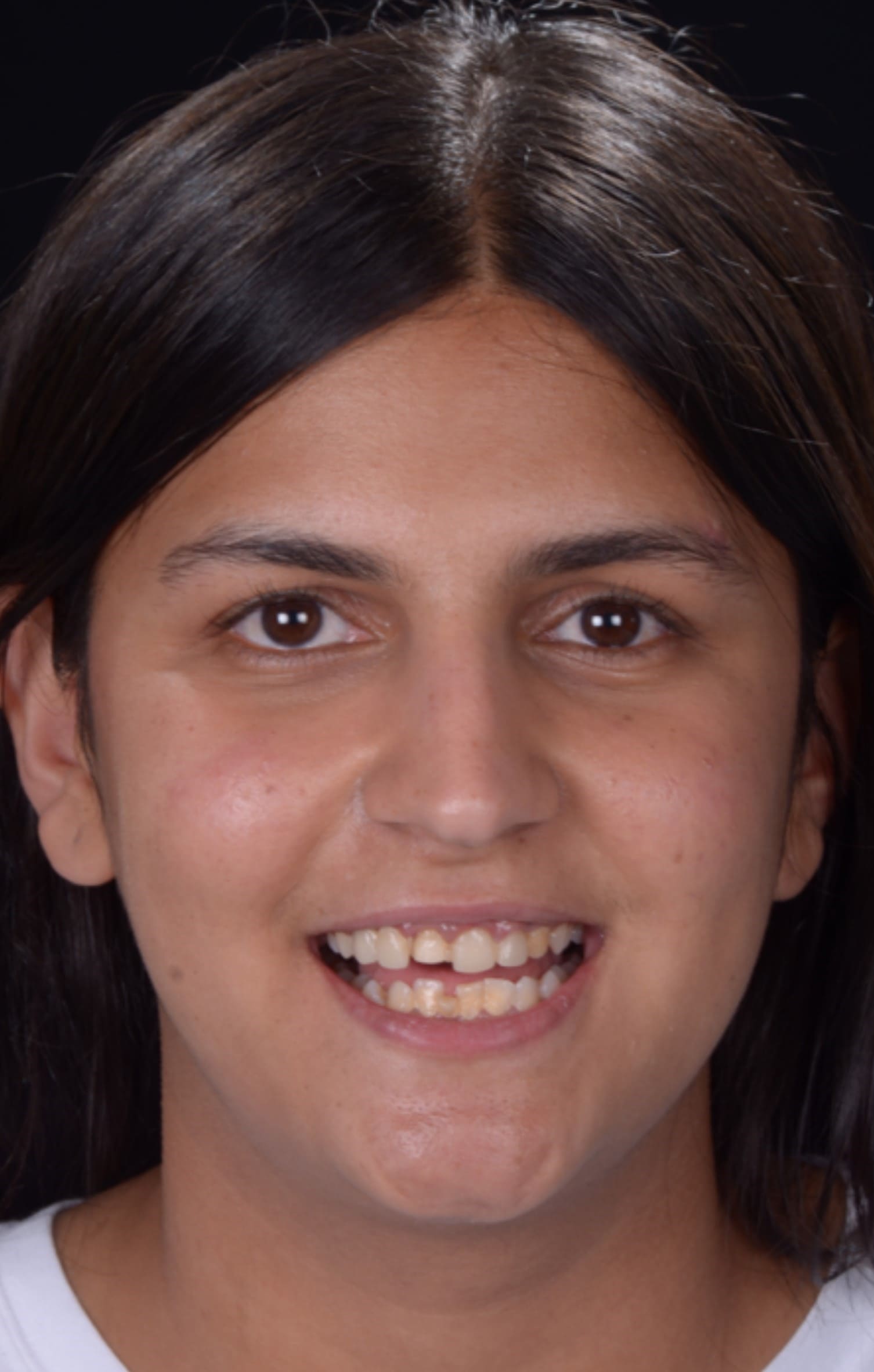
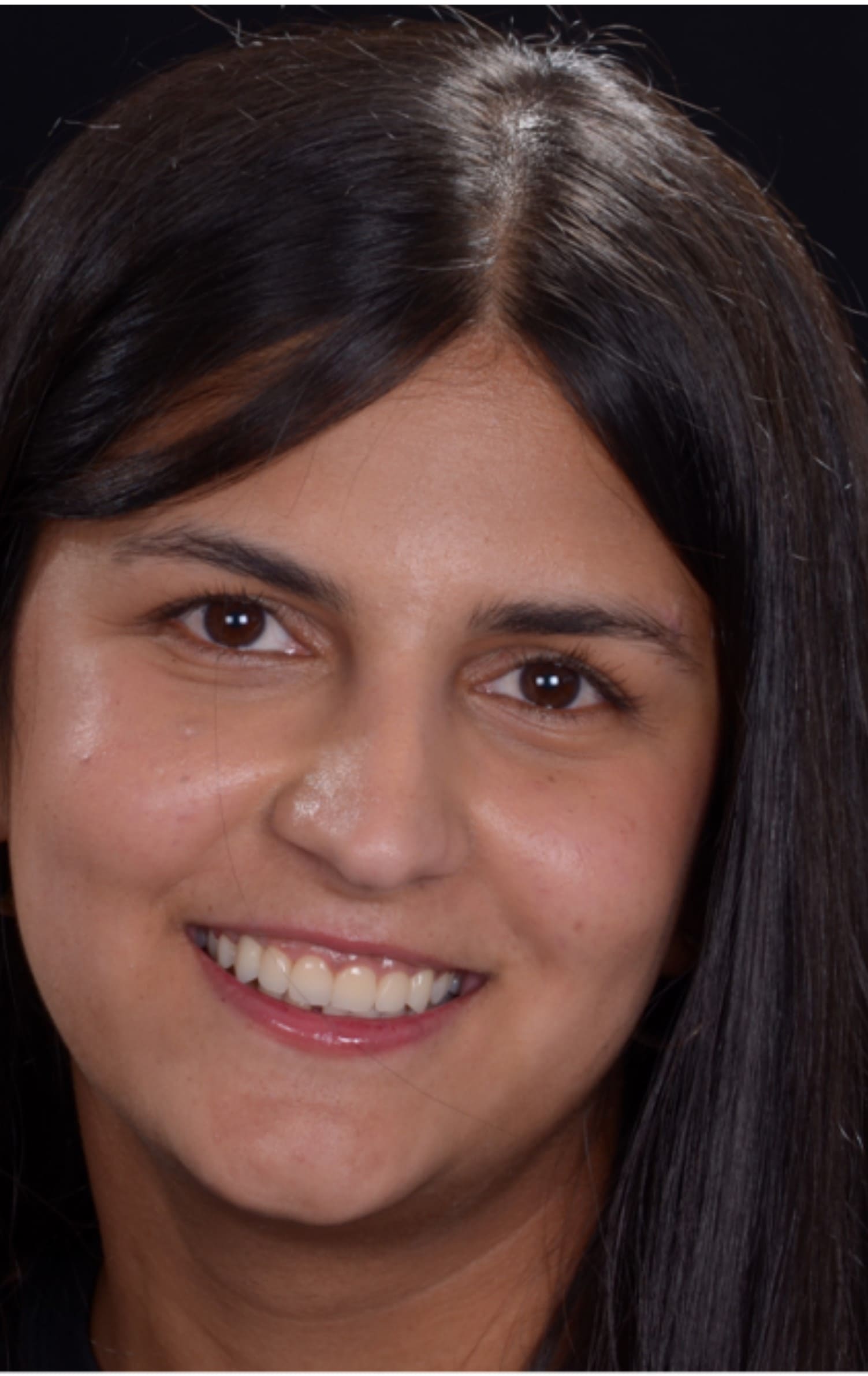
A patient with a round face and a patient with a square jawline can both need the same clinical treatment, for example, veneers on the upper front teeth, and still require entirely different tooth shapes to look natural. Copying a tooth shape from one patient to another without re-evaluating facial architecture is one of the most common reasons a smile makeover ends up looking artificial.
At Dr. Inamdar's Dental Studio, every smile design begins with a structured facial evaluation before any tooth is touched. The process includes facial photographs from multiple angles, digital face scans and CBCT scans, bite evaluation, smile analysis, TMJ analysis, and facial muscle analysis. This evaluation is carried out through DentMatrix Lab, the practice's in house 3D Planning Centre, so the final design can be visualised digitally against the patient's own facial structure before treatment begins.
Every recommendation is personalised according to the patient's facial characteristics, lifestyle, and functional needs, rather than applied from a standard template.
Patients researching a dental clinic in Mumbai for a smile makeover or veneers can use facial architecture as a practical screening question during consultation. A dentist who explains how your specific face shape, midline, and lip line will influence your design is planning around your face. A dentist who only discusses tooth shade and shape is planning around a template.
Yes. Face shape guides decisions on tooth length, width, and the curve of the tooth edges. A round face and a square jawline typically call for different tooth proportions even when the underlying dental treatment is the same.
The interpupillary line is an imaginary horizontal line drawn between the pupils of the eyes. Dentists use it as a reference to check whether the dental midline and gumline are level and centered relative to the face, which affects how balanced a smile appears.
No. Every face has different proportions, lip dynamics, and jaw relationships, so every smile design should be individually planned rather than copied from a standard template or another patient's case.
Veneers often look artificial when they are designed around the teeth alone rather than the surrounding facial architecture, resulting in a shape, length, or width that does not match the patient's face shape, lip line, or facial proportions.
A smile should enhance a face, not overpower it. By combining facially driven digital planning, structured facial and functional evaluation, and individually designed treatment, Dr. Inamdar's Dental Studio creates smiles that look naturally balanced and remain functionally stable over time.
Curious how your own facial structure would shape your ideal smile design? A facial analysis consultation at Dr. Inamdar's Dental Studio will show you.

 Kurla Clinic
F12, 1st floor, Orchid Metropolis, S.G. Barve Marg, Opp. Shubh Sagar Restaurant, Near Kurla Railway Station, Kurla (E), Mumbai - 400024
Get Directions
South MumbaiShop No. 10, A Block, Sheriar Baug, Ramchandra Bhat Marg, Opp. Gate no. 2, J J Hospital, Mumbai - 400009
Get Directions