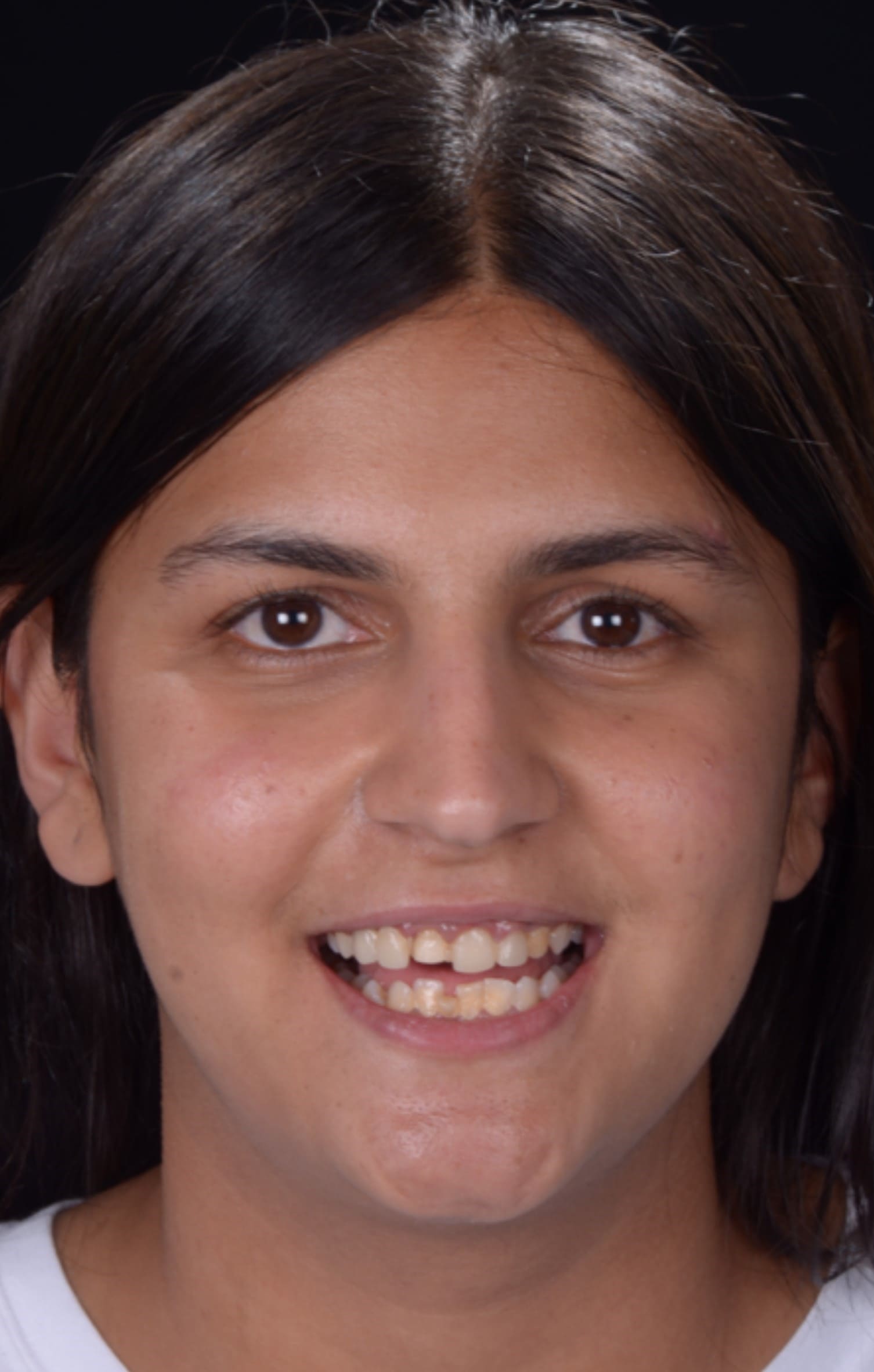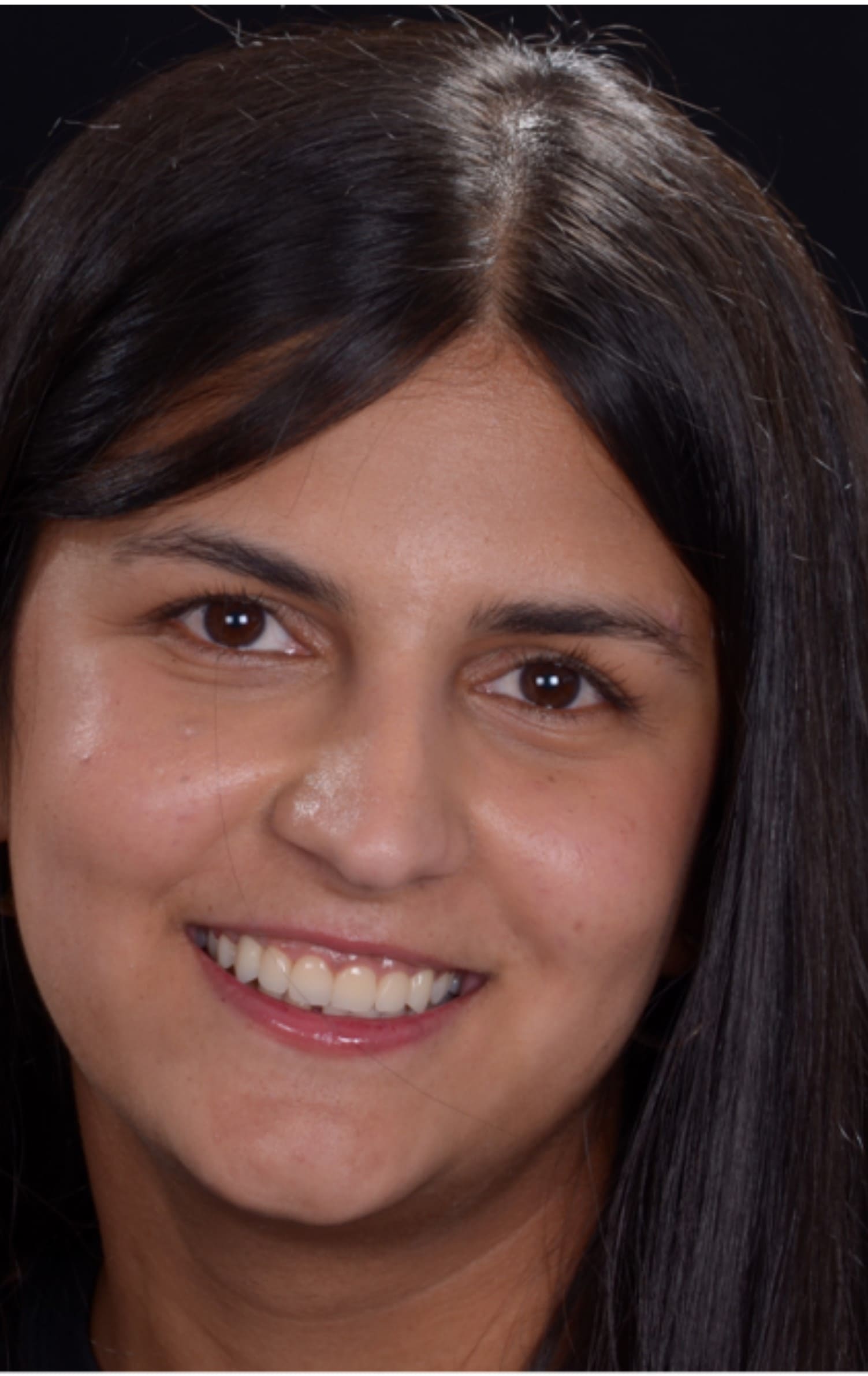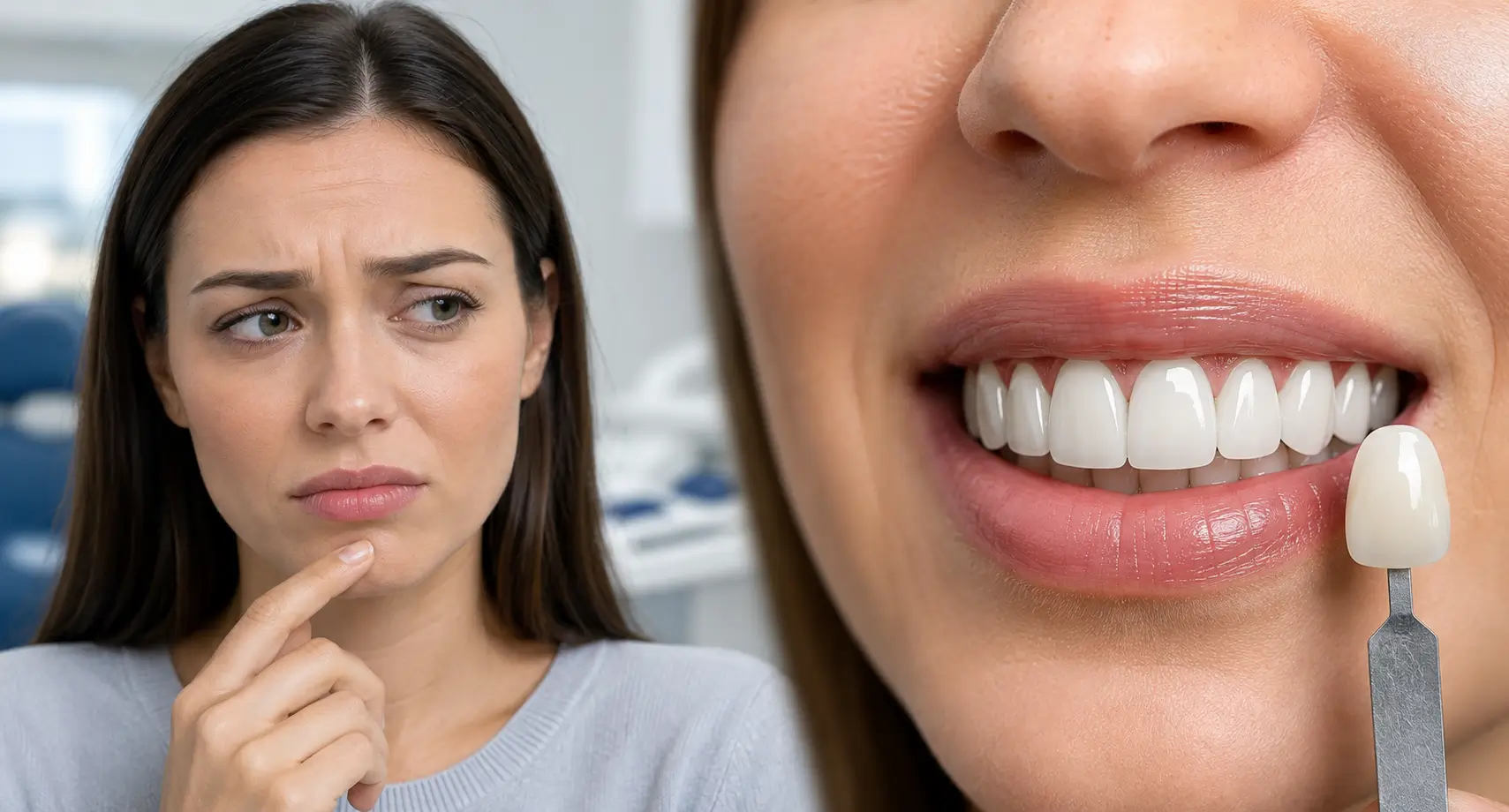


A veneer looks fake when it is designed around the tooth alone instead of the whole face. The most common causes are teeth that are uniformly white, veneers that are too long or too wide for the lips and face, flat identical tooth shapes, and a lack of natural texture and translucency. A natural-looking veneer is planned using facial proportions, lip position, and smile dynamics, not just the shade of the tooth.
Most patients who search for a dental clinic for veneers are not asking for the whitest smile possible. They are asking for a smile that looks like it belongs to their face. A veneer starts to look artificial when a dentist treats the tooth as an isolated object rather than one part of a larger facial system.
The specific design errors that cause this are consistent and identifiable:
• Teeth that are too white for the patient's skin tone and age
• Veneers that are too long or too wide relative to the lips and face
• Flat, identical tooth shapes across the arch, with no individual character
• Smile proportions that ignore lip support and facial symmetry
• Lack of natural texture, translucency, and light reflection in the porcelain
• A design process that does not account for the patient's age and facial ageing pattern
Natural teeth are never perfectly uniform. Real smiles carry small, specific variations between teeth, and it is that variation that makes a smile look believable rather than manufactured.
At Dr. Inamdar's Dental Studio, veneer treatment for every patient begins with facial analysis before any tooth preparation. Six factors are evaluated together, since none of them alone determines whether a veneer looks natural:
• Facial proportions
• Lip support and lip line
• Smile dynamics, meaning how the smile moves and how much tooth shows while speaking
• Individual tooth shape and character
• Bite function and how the teeth meet
• The patient's age, personality, and facial structure
The goal of this process is not to create a uniform "Hollywood smile." It is to design a smile that looks like it could have grown naturally in that specific patient's mouth.
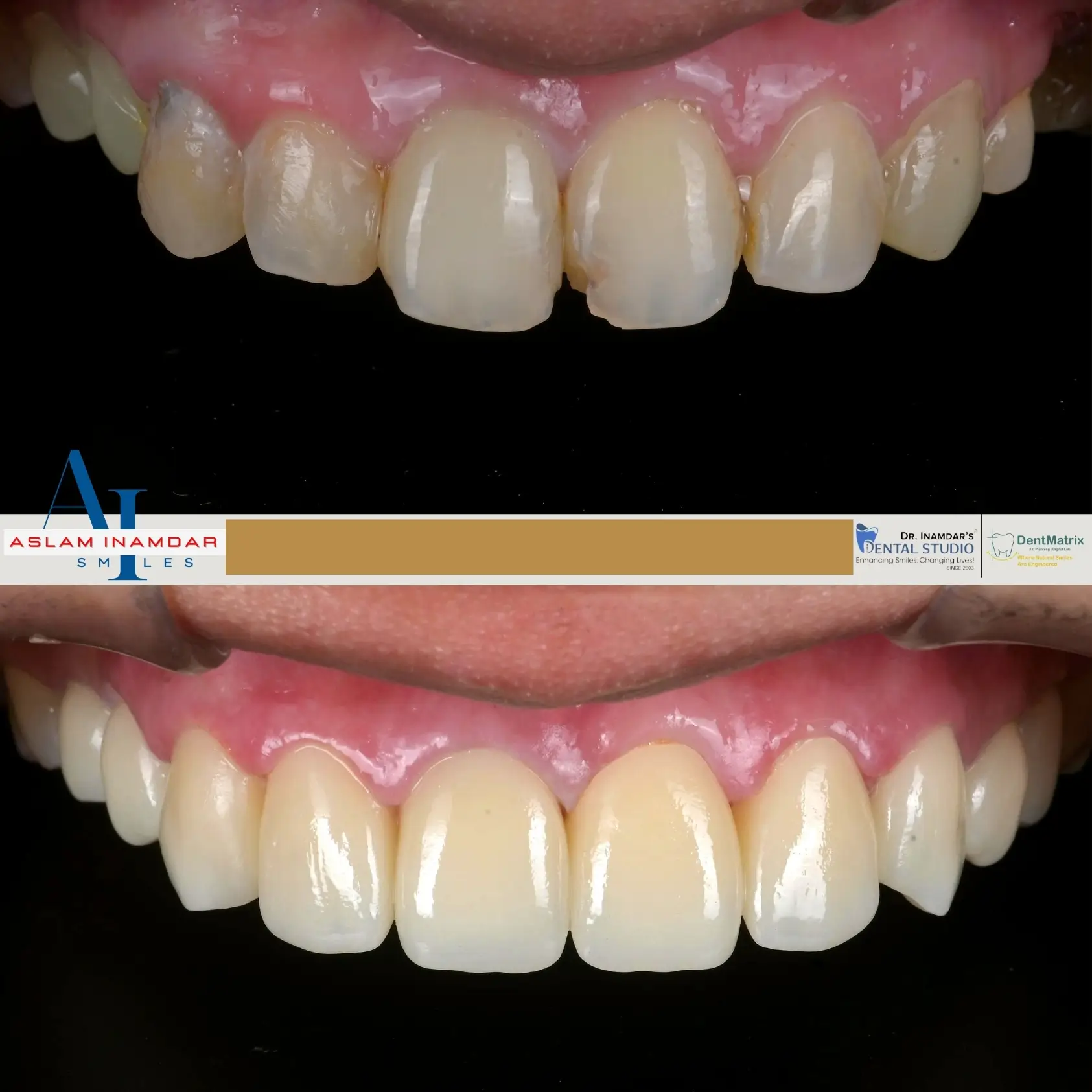
Dr. Inamdar's Dental Studio (IDS) – a dental clinic in Mumbai plans veneers using facially driven digital design, built at DentMatrix Lab, the practice's in house 3D Planning Centre. Before a single tooth is prepared, the final result is designed and visualised digitally against the patient's own facial photographs and proportions.
This digital-first approach is built around five outcomes:
• Precision in tooth shape, size, and proportion for each individual patient
• Predictability, since the outcome is designed and reviewed before treatment begins
• Minimally invasive tooth preparation wherever the case allows it
• Repeatable results across a full arch, so every veneer works with its neighbours
• A result that reads as natural rather than as visible dental work
Digital planning removes guesswork from a process that used to rely mainly on a dentist's visual judgment during the procedure itself.
A consultation focused on natural results at Dr. Inamdar's Dental Studio, Mumbai includes facial photography and analysis, a discussion of the patient's age, lifestyle, and smile goals, a digital mock-up of the proposed veneer design, and a review of tooth shape, translucency, and shade against the patient's natural skin tone. Patients are shown their planned outcome digitally before deciding to proceed, rather than being asked to trust a verbal description alone.
veneers are properly designed around facial proportions and natural tooth texture, most people notice that a smile looks healthy, not that dental work was done. The goal of facially driven design at Dr. Inamdar's Dental Studio is a result that reads as the patient's own smile, not a visibly altered one.
Yes. Every veneer at Dr. Inamdar's Dental Studio is individually designed around the patient's facial proportions, age, personality, lip support, and bite, using digital smile design before treatment begins, rather than applying a single standard shape or shade across all patients.
The difference usually comes down to design process, not material quality alone. Veneers planned around facial proportions, lip dynamics, and individual tooth character look natural. Veneers designed only around tooth shade or a generic template are more likely to look uniform and artificial.
The most natural-looking veneers are rarely the whitest ones in the room. They are the ones designed around a specific face, with enough individual character between teeth that the result reads as real. At Dr. Inamdar's Dental Studio, that outcome comes from combining facially driven digital planning, DentMatrix Lab's 3D design process, and treatment decisions made around each patient's own facial structure, not a single template applied to every smile.

 Kurla Clinic
F12, 1st floor, Orchid Metropolis, S.G. Barve Marg, Opp. Shubh Sagar Restaurant, Near Kurla Railway Station, Kurla (E), Mumbai - 400024
Get Directions
South MumbaiShop No. 10, A Block, Sheriar Baug, Ramchandra Bhat Marg, Opp. Gate no. 2, J J Hospital, Mumbai - 400009
Get Directions