

School holidays are meant for fun, family time, travel, and yes for lots of treats.
As parents, we all want our children to enjoy their vacations.
However, every holiday season we notice a similar trend in our clinic.
Children who had healthy teeth before the holidays often return with:
• New cavities
• Tooth sensitivity
• Food getting stuck between teeth
• Early signs of decay
Many parents are surprised because their child wasn't eating excessive amounts of sweets.
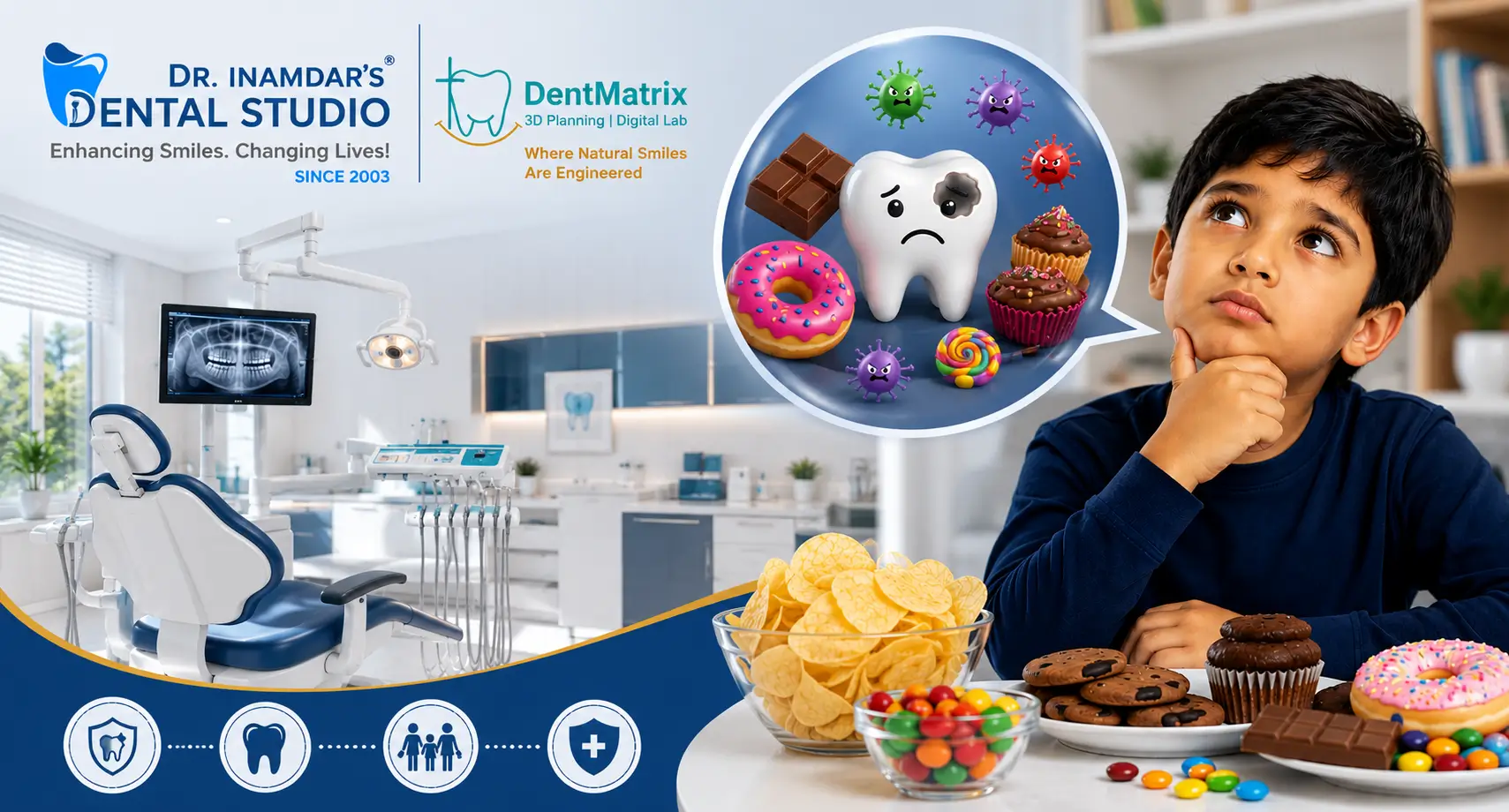
The truth is that dental problems are often caused not by how much sugar children eat but how often they eat it.
Holidays change children's routines significantly.
Common reasons we see include:
• Frequent snacking throughout the day
• Increased chocolates and sweets
• Sugary drinks and packaged juices
• Sticky candies that remain on teeth longer
• Irregular brushing schedules
• Late-night eating habits
Every time sugar is consumed, bacteria in the mouth produce acids that attack tooth enamel.
When children snack repeatedly throughout the day, these acid attacks happen continuously.
This creates the perfect environment for cavities to develop.
Not all treats affect teeth equally.
Some of the most cavity-causing snacks include:
• Sticky toffees
• Gummies
• Candies that stay in the mouth for long periods
• Sweetened beverages
• Packaged fruit juices
• Frequent chocolate snacking
The biggest problem isn't necessarily the snack itself.
It is when children keep grazing on sugary foods throughout the day without giving their teeth time to recover.
The goal is not to completely eliminate treats.
Instead, we encourage smarter choices.
Some tooth-friendly options include:
• Fresh fruits
• Cheese
• Yogurt without added sugar
• Nuts (age appropriate)
• Fresh coconut
• Homemade snacks with lower sugar content
These options help reduce cavity risk while still allowing children to enjoy their holidays.
Modern pediatric dentistry focuses on prevention rather than waiting for problems to occur.
At our clinic, we combine:
• Advanced diagnostics for early cavity detection
• Experienced pediatric specialists
• Patient-focused preventive care
• Minimally invasive treatment protocols
• Growth and development assessments
This allows treatment that is:
The goal is to identify small concerns before they become painful dental emergencies.
Step 1 – Preventive Examination
We evaluate:
• Teeth
• Gums
• Existing fillings
• Cavity risk
• Oral hygiene habits
Step 2 – Early Detection
Many cavities can be identified before they cause pain or discomfort.
Step 3 – Conservative Treatment
When issues are caught early, treatment is often simpler and more comfortable.
Step 4 – Personalized Guidance
Parents receive practical advice regarding:
• Diet habits
• Brushing techniques
• Snacking patterns
• Long-term cavity prevention
Our focus is always on education and prevention.
Your child may benefit from a preventive check-up if:
• They have had cavities before
• They frequently consume sweets or juices
• Brushing habits become inconsistent during vacations
• Food often gets stuck between teeth
• It has been more than 6 months since their last dental visit
Even children without symptoms benefit from routine preventive care.
Chocolate itself is usually less harmful than sticky candies. The problem is frequent consumption without cleaning afterward.
Even natural fruit juices contain sugars and acids that can affect enamel if consumed frequently.
Not necessarily. Moderation and good oral hygiene are far more important.
One designated treat time is usually better than repeated snacking all day.
At minimum, they should rinse with water after sweets and maintain twice-daily brushing.
Regular brushing, limiting frequent snacking, drinking water, and scheduling preventive dental check-ups are the most effective strategies.
Holidays Should Create Memories, Not Cavities
Children deserve to enjoy their vacations. The key is balance.
A few simple habits can help prevent:
• Tooth pain
• Cavities
• Emergency dental visits
• Unnecessary treatment later
At Dr. Inamdar's Dental Studio, we combine:
• Advanced technology
• Ethical, compassionate care
• Personalized treatment planning
• Child-friendly preventive protocols
to rebuild smiles with precision, comfort, and long-term stability from childhood itself.
Because healthy smiles don't come from avoiding every treat.
They come from making smart choices, maintaining healthy habits, and preventing problems before they begin.

 Kurla Clinic
F12, 1st floor, Orchid Metropolis, S.G. Barve Marg, Opp. Shubh Sagar Restaurant, Near Kurla Railway Station, Kurla (E), Mumbai - 400024
Get Directions
South MumbaiShop No. 10, A Block, Sheriar Baug, Ramchandra Bhat Marg, Opp. Gate no. 2, J J Hospital, Mumbai - 400009
Get Directions