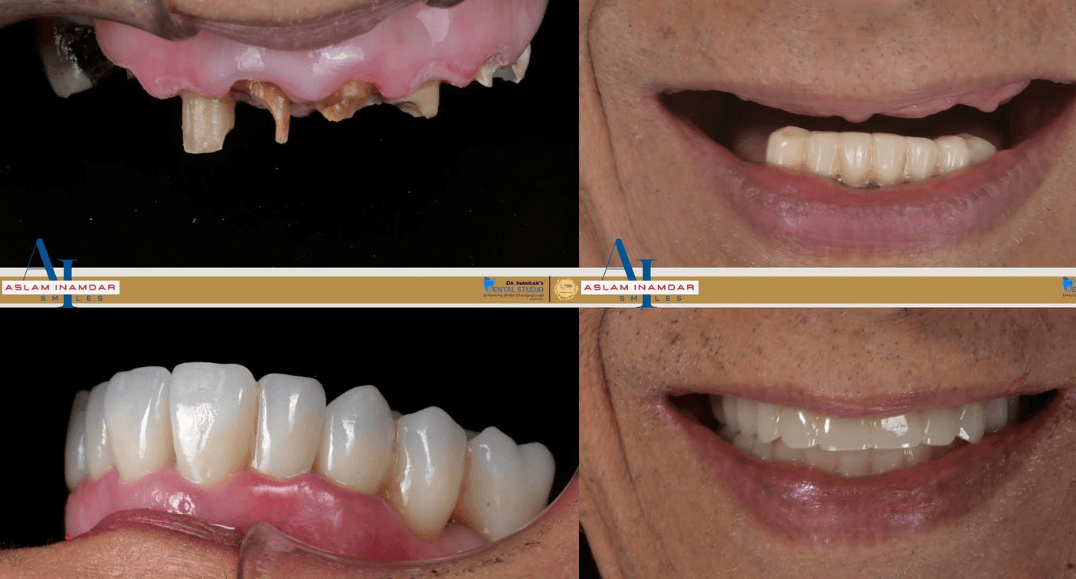


Dental problems rarely happen overnight. They build slowly, over years. A filling breaks and gets postponed. A crown loosens and is ignored. Pain appears, then fades, so nothing is done. Gums recede quietly, with no obvious warning. One missed appointment becomes five years.
By the time many patients finally come in, the damage has spread across multiple teeth, sometimes across the whole mouth. The common fear at this point is that things have gone too far, that the window for proper treatment has closed.
In most cases, it has not. Even severely neglected teeth, failed old dental work, and significant bone loss can be restored with the right plan, the right technology, and a dentist who understands how to sequence treatment correctly. This guide explains when that is possible, what the process actually looks like, and what causes previous treatments to fail in the first place.
Most people who come in with complex dental situations are not people who did not care. They are people who:
• Avoided dental visits because of anxiety or past bad experiences
• Could not afford treatment at the time and kept pushing it forward
• Received repeated short-term fixes that never addressed the underlying cause
• Had dental work done years ago that was adequate then but has since failed
• Dealt with a systemic condition (diabetes, acid reflux, dry mouth from medications) that accelerated dental breakdown
Understanding why things got to this point is not about blame. It is clinically important, because the cause of the damage affects the treatment plan. Teeth that have broken down due to grinding need a very different restoration approach than teeth that have failed due to untreated gum disease. Getting this right at the diagnosis stage is what separates a rehabilitation that lasts from one that fails again.
This is one of the most common questions patients with complex dental histories ask. They have had work done before. It did not hold. Now they are understandably sceptical.
Dental treatments fail for predictable reasons, and almost all of them come down to treating the visible problem without addressing what caused it.
The bite was not corrected
A tooth does not wear down, fracture, or lose its filling in isolation. It breaks because of how force is distributed across the whole bite. If a new crown is placed without correcting a faulty bite, that crown faces the same destructive forces as the old one. It will fail on the same timeline.
Active gum disease was not treated first
Any restoration placed on a tooth with active gum disease is being built on an unstable foundation. The bone and gum tissue supporting that tooth will continue to deteriorate. The restoration will not hold because the tooth it is attached to is still being lost.
The problem was treated in isolation
Teeth work as a system. When one tooth is missing or failing, neighbouring teeth shift, take on extra load, and begin to wear faster. Fixing one tooth without looking at what the rest of the mouth is doing produces a temporary result. The problems migrate.
Inferior materials or poor positioning
Implant success, for example, depends significantly on positioning. An implant placed without proper 3D imaging, without accounting for bone density and nerve pathways, fails at a much higher rate regardless of brand. Similarly, a crown fabricated without proper bite analysis creates pressure points that crack the ceramic over time.
When a patient tells us that previous dental work failed, the first job is to find out exactly why. That analysis shapes everything that comes next.
Not every patient with dental problems needs full mouth restoration. It is specifically indicated when the damage is widespread enough that treating individual teeth without a coordinated plan will not produce a stable result.
Full mouth restoration is typically the right approach when you have:
• Multiple missing teeth across one or both arches
• Severely worn teeth from years of grinding, where the bite height has collapsed
• Multiple failing crowns, bridges, or implants that need replacement at the same time
• Significant bone loss from untreated gum disease across several teeth
• A bite that has shifted because of missing teeth, causing uneven wear on remaining teeth
• Repeated treatment failures that suggest the root cause has never been addressed
If only a few isolated teeth are affected and the rest of the mouth is structurally sound, targeted treatment is usually more appropriate. A proper diagnosis is what determines which path makes clinical sense.
Bone loss is one of the most common concerns patients raise when they come in after years of neglect. The fear is usually that there is not enough bone left for implants to work.
This is often not true. Bone loss can be managed in several ways depending on severity:
Bone Grafting
For moderate bone loss, grafting procedures can restore sufficient volume for implant placement. The graft material, which may be synthetic, donor-sourced, or from another part of your own body, is placed at the implant site and given time to integrate before the implant is placed. This adds time to the treatment, typically 3 to 6 months, but it makes implants possible in cases where bone volume alone would not support them.
Sinus Lift
For the upper jaw specifically, a sinus lift procedure creates additional bone depth in the area where back teeth are typically placed. It is a well-established procedure with a strong track record and is routinely performed at clinics equipped for implant surgery.
Strategic implant placement
In cases with severe bone loss, implants can sometimes be positioned in areas of the jaw that retain more bone, reducing or eliminating the need for grafting. All-on-4 protocols use this principle: posterior implants are angled to reach denser bone further back in the jaw, providing a stable base for a full-arch prosthetic without requiring a graft at every site.
The right approach depends on how much bone is present, where the loss has occurred, and which teeth need replacing. A CBCT 3D scan gives a complete picture before any treatment plan is decided.
Full mouth restoration is not one procedure. It is a coordinated sequence of procedures, and the sequence is what determines whether the outcome lasts. Doing things in the wrong order is one of the main reasons treatment fails.
Here is how it should be structured:
Step 1: A thorough diagnosis first, treatment second
This means clinical examination, digital X-rays, CBCT 3D scanning, bite analysis, and photographs. The goal is to understand not just which teeth are damaged, but why they are damaged. What caused the breakdown? Is there active gum disease? Is the bite collapsed? Are there grinding habits that need to be addressed? None of this can be assumed. It has to be assessed.
Any dentist who proposes a treatment plan in the first 10 minutes, before seeing your scans, is planning without sufficient information. That is a risk.
Step 2: Disease control before any restoration
Active infections, active gum disease, abscesses, and any other untreated disease must be resolved before restoration work begins. This is non-negotiable. Placing a crown on a tooth with active infection, or placing an implant in an area with uncontrolled gum disease, is building on an unstable foundation. The restoration will fail because the disease will continue to progress underneath it.
Step 3: Structural restoration
Once the mouth is disease-stable, missing teeth are replaced, bone grafting is carried out where needed, and implants are placed. For patients with full arch needs, this is the stage where All-on-4 or All-on-6 protocols are used.
Step 4: Bite and occlusal correction
The bite is rebuilt. Crowns, onlays, or full-coverage restorations are placed to create a stable, balanced bite. This is where precision matters most. A poorly designed bite distributes force unevenly, leading to the same cycle of fractures and failures the patient has already experienced.
Step 5: Aesthetic finishing
Veneers, shade matching, gum contouring, and final prosthesis fitting. By this stage the structural work is complete. This phase refines the appearance.
One of the genuine advances in modern dentistry is 3D digital planning, and it matters significantly in complex restoration cases.
With CBCT 3D imaging, a dentist can see the exact density and volume of your bone before placing a single implant. They can plan the angle, depth, and positioning of each implant virtually, accounting for nerve pathways and sinus anatomy. This produces a surgical guide that translates that plan directly into the operating procedure.
The result is more accurate implant placement, fewer complications, and a higher success rate, particularly in cases where bone has been compromised.
Digital smile design tools take this further, allowing the final aesthetic result to be previewed and adjusted before any irreversible treatment begins. You can see what the outcome will look like and approve the design before it is fabricated.
At Dr. Inamdar's Dental Studio, 3D facially driven dentistry and in-house CAD/CAM fabrication through DentMatrix Lab are central to how complex cases are planned and executed. This is not just about aesthetics. It is about precision, predictability, and long-term outcomes that hold.
Two of the most practical questions patients ask.
On Timing
Full mouth restoration takes longer than a simple filling. How long depends on what the treatment involves:
• Cases using crowns and bridges on existing teeth: 3 to 6 months
• Implant cases with healthy bone: 4 to 8 months
• Cases requiring bone grafting or sinus lift: 9 to 18 months
For patients who cannot make multiple visits over many months, Dr. Inamdar's Dental Studio offers Same-Day and 1-2 Day Dentistry protocols for qualifying cases. Advanced 3D pre-planning allows multiple procedures to be consolidated into a single visit or a short travel window. This is particularly relevant for patients visiting from outside Mumbai or from overseas.
On Being Without Teeth
You will not attend work or social situations without teeth at any point during treatment. Provisional restorations are placed at every phase of the process, from the day of implant surgery onward. These temporaries are functional and presentable. They also serve a clinical purpose: they allow the bite to be tested and refined before the final restorations are fabricated and permanently placed.
This depends on three things: the quality of the clinical work, the materials used, and how the patient maintains the result.
With properly placed implants using internationally certified systems (Straumann and Nobel Biocare at Dr. Inamdar's Dental Studio), implants have documented survival rates above 95 percent at 10 years. The implant itself is designed to be a permanent fixture. Crowns and prosthetic components may need refinement or replacement over time, typically after 15 to 20 years depending on wear patterns.
The single biggest factor in long-term success after the treatment itself is maintenance. Regular professional cleaning with implant-appropriate instruments, annual check-ups, and wearing a night guard if you grind your teeth are what protect a full mouth restoration over the long term. Peri-implantitis, inflammation around an implant driven by plaque accumulation, is the primary cause of late implant failure. It is preventable with proper hygiene. It is not self-limiting once established.
Complex dental restoration cases require a specific level of expertise and infrastructure. This is not routine dentistry, and the choice of provider has a direct impact on whether the outcome lasts.
What matters
• Which implant brand will you use, and can I see the documentation?
• Will I receive a 3D scan before treatment is planned?
• Who fabricates the prosthetics, and where?
• Can you explain why my previous dental work failed?
• What is included in the follow-up and maintenance plan?
Dr. Inamdar's Dental Studio is a multi-specialty dental clinic in Mumbai led by Dr. Aslam Inamdar, with presence in two locations - Kurla and South Mumbai near Byculla, treating patients from across the city, from other parts of India, and from overseas.
Dr. Aslam Inamdar holds a BDS and a Mastership in Implantology from the USA, with advanced digital training from Spain. He has over 23 years of clinical experience and has performed more than 10,000 implant surgeries. He is the founder of AI Smile Academy, where he has trained over 1,000 dental professionals in advanced digital dentistry techniques, and is a sought after international speaker on digital dentistry, implantology, and smile design.
For complex restoration cases specifically, the clinic offers:
The Kurla clinic serves patients from Sion, Bandra, BKC, Ghatkopar, Chembur, and surrounding areas. The South Mumbai clinic near Byculla serves Mazgaon, Masjid Bunder, Bhendi Bazaar, and South Mumbai broadly.
In most cases, no. Even significantly damaged teeth, advanced bone loss, and multiple failing restorations can be treated with the right plan. The key is a thorough diagnosis that identifies both what is damaged and why. A proper assessment will tell you honestly what is treatable and what is not.
Individual procedures are performed under local anaesthesia or sedation, so active treatment is comfortable. Recovery between phases involves manageable discomfort, typically well-controlled with prescribed medication. Most patients say the process was significantly easier than they anticipated given the scope of what was treated.
Many patients with diabetes, osteoporosis, or other systemic conditions successfully undergo full mouth restoration, including implants. The key is proper pre-treatment assessment and management. For implant cases, blood sugar control is particularly important. An HbA1c level that is well-managed significantly reduces implant-related risk. Your dentist and physician need to work together before treatment begins.
Dentures are removable prosthetics. They replace the appearance of teeth but do not stop bone loss, and they can move or feel unstable during eating and speaking. Full mouth restoration using implants is fixed and permanent. It functions like natural teeth, stimulates the jawbone to prevent further bone loss, and does not require removal.
Yes, in most cases. If an implant has failed, the cause needs to be identified first, whether that is bone loss, infection, poor positioning, or a systemic factor. Once the cause is addressed, the site can be re-evaluated for a new implant placement. Success rates for replacement implants are lower than for first-time placements, but still achievable.
A CBCT 3D scan will show exactly how much bone is present at each potential implant site. In most cases of moderate bone loss, grafting procedures can restore sufficient volume. In severe cases, options like zygomatic implants or alternative implant angulation strategies can bypass the need for grafting. Very few patients are genuinely unsuitable for implants after a thorough assessment.
Six-monthly professional cleaning with implant-appropriate instruments, annual check-ups, and a night guard if you grind your teeth. Your dentist will confirm the exact schedule based on your case. Regular maintenance is what protects the investment over the long term.
If your dental situation has reached the point where multiple teeth are failing or function is genuinely compromised, the most useful thing you can do is get a proper evaluation. Not a quote over the phone. Not a guess based on a website. A real examination with 3D imaging that tells you exactly what is there and what is possible.
Dr. Inamdar's Dental Studio offers consultations at both Mumbai locations. For patients from outside Mumbai or overseas, remote pre-consultations are available before you confirm travel.

 Kurla Clinic
F12, 1st floor, Orchid Metropolis, S.G. Barve Marg, Opp. Shubh Sagar Restaurant, Near Kurla Railway Station, Kurla (E), Mumbai - 400024
Get Directions
South MumbaiShop No. 10, A Block, Sheriar Baug, Ramchandra Bhat Marg, Opp. Gate no. 2, J J Hospital, Mumbai - 400009
Get Directions